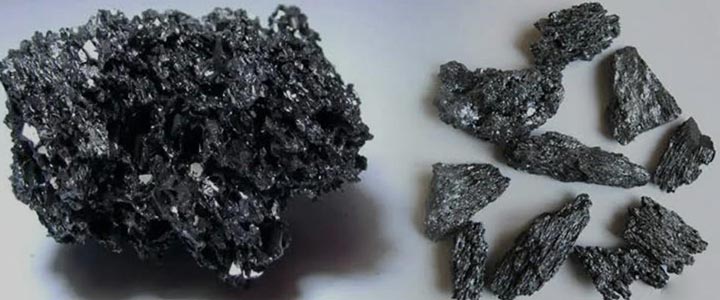
High-temperature resistance furnaces are used to melt quartz sand, petroleum coke (or coal coke), sawdust, and other raw materials. Moissanite is one of the main components of natural Silicon Carbide. Silicon Carbide is widely used in high-tech non-oxide refractory materials such as C, N, and B. Silicon Carbide can be simply classified according to different criteria:
1. By color: The grinding industry categorizes Silicon Carbide into black and green silicon carbide based on color. Colorless to dark green Silicon Carbide is considered green, while light blue to black Silicon Carbide is considered black.
2. By application: Silicon Carbide is classified as abrasives, refractories, deoxidizers, and electrical silicon carbide. Currently, the main types of Silicon Carbide produced in my country are black and green. Green Silicon Carbide contains over 97% SiC and has excellent self-sharpening properties. It is commonly used for machining carbide, titanium alloys, and optical glass. It is also used for honing cylinder liners and precision high-speed steel tools.
Black Silicon Carbide has a metallic luster and contains over 95% silicon. It is stronger than green Silicon Carbide, but has a lower hardness. It is primarily used for grinding cast iron and non-metallic materials, particularly for processing materials with low tensile strength, such as glass, ceramics, stone, refractories, cast iron, and non-ferrous metals. Besides being an abrasive, Silicon Carbide has many other uses, including manufacturing high-quality refractory materials. It offers advantages such as thermal shock resistance, compact size, light weight, high strength, and energy efficiency.
Low Silicon Carbide is an excellent deoxidizer, accelerating steelmaking, facilitating control of steel chemical composition, and improving steel quality. Silicon Carbide is also widely used in electric heating elements. For more information, please contact us.


 English