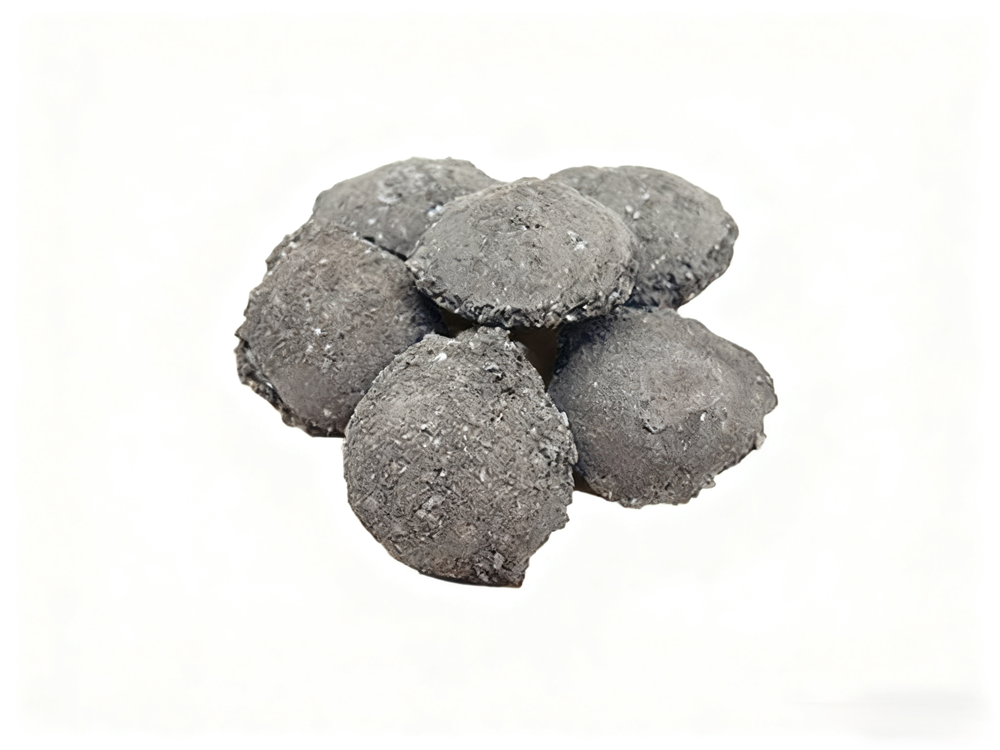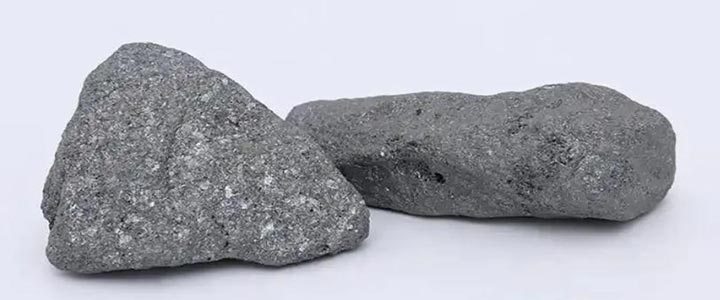
As a new alloy material, Silicon Carbon Alloy is widely used in the steelmaking industry. It can shorten deoxidation time, save energy, reduce costs, improve steelmaking efficiency, reduce raw material consumption, and minimize environmental pollution. Furthermore, since Silicon Carbon Alloy also contains a certain amount of carbon, its use can also increase carbon content, playing a significant role in improving the overall efficiency of electric furnaces. To provide a deeper understanding of the role of Silicon Carbon Alloy, this article focuses on the main components and functions of silicon-carbon alloys.
The silicon in Silicon Carbon Alloy has a significant deoxidizing effect on molten steel. Furthermore, as an alloying element in steel, silicon, typically present in iron or austenite at a mass fraction below 0.4%, can reduce the austenite region. It also increases annealing, normalizing, and quenching temperatures, improving the hardenability of hypoeutectoid steel. Silicon does not form carbides, strongly promoting the graphitization of carbon. Since it does not contain carbide-forming elements, it readily undergoes graphitization at certain temperatures.
For ordinary low-alloy steel, it can improve its strength, modify localized corrosion resistance, and enhance hardenability and tempering resistance. It is a key alloying element in multi-alloy structures. It is widely used as a strong carbide element in materials such as silicon steel, silicon steel, tungsten, vanadium, molybdenum, niobium, and chromium at a mass fraction of 0.5% to 2.8%.
In steel, carbon is the primary alloying element, so steel is also called an iron-carbon alloy. The primary function of carbon in steel is to form solid solution structures, such as iron and austenite, enhancing its strength. The formation of carbides, which dissolve carbon, increases the steel's hardness and wear resistance. For example, cementite such as Fe3C is a carbide structure.
Increasing carbon content increases strength and hardness, but decreases plasticity and toughness. Conversely, lower carbon content increases plasticity and toughness, but decreases strength and hardness. For more information, please contact us.


 English