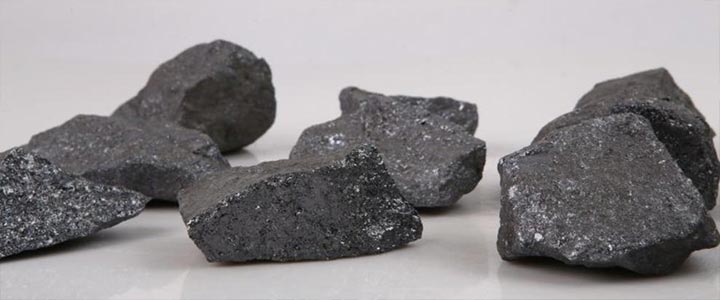
Steel requires various additives, each with different functions, such as deoxidizers and reducing agents. Silicon Carbon Alloy is commonly used as a deoxidizer in large steel mills. Using Silicon Carbon Alloy as a deoxidizer not only provides excellent deoxidation but also reduces impurities, preventing other impurities from seeping into the molten steel. What are the advantages of silicon carbide in metallurgy?
Deoxidation with Silicon Carbon Alloy: Silicon Carbon Alloy contains silicon. When added during the steelmaking process, silicon reacts with oxygen to deoxidize the molten steel, improving its hardness and quality. Silicon has a strong affinity for oxygen, so it maintains excellent anti-splatter properties after the molten steel enters the furnace.
Slag Collection Advantages: Silicon Carbon Alloy also offers slag collection advantages. Adding a certain proportion of silicon carbon alloy to molten steel can quickly aggregate oxides during the steelmaking process, making it easier to filter and process, resulting in a purer molten steel and increasing its density and hardness.
Raising Furnace Temperature: Silicon Carbon Alloy is a material with excellent high-temperature resistance. Adding it can raise furnace temperatures, increase ferroalloy conversion, and accelerate elemental reactions in the molten steel.
It's well known that deoxidizers are added in the later stages of steelmaking. If too much is added, the molten steel temperature will drop, necessitating the addition of a warming agent. Adding Silicon Carbon Alloy can also raise the molten steel temperature and reaction rate to a certain extent, preventing impurities from entering the molten steel after other additives are added, thus facilitating steel purification.
The above is information from a Silicon Carbon Alloy manufacturer regarding the advantages of silicon carbon alloys in metallurgy. For more information, please contact us.


 English