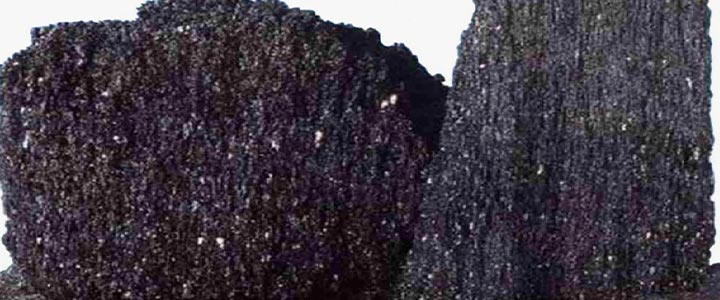
Silicon Carbide is a hard material with a Mohs hardness of 9.0 to 9.5. At low temperatures, Silicon Carbide is chemically very stable and exhibits excellent corrosion resistance, even in boiling hydrochloric, sulfuric, and hydrofluoric acids.
Silicon Carbide has three main applications:
①Silicon Carbide can be used to manufacture abrasives and grinding tools, such as grinding wheels, oilstones, grinding heads, and sanding tiles.
②Silicon Carbide can be used to manufacture resistance heating elements, such as silicon carbide rods and tubes.
③Silicon Carbide can also be used to manufacture refractory products.
As a specialty refractory material, it is used in steelmaking for blast furnaces and cupolas, where it is subject to high pressure, corrosion, and wear. Leveraging Silicon Carbide's corrosion resistance, thermal shock resistance, wear resistance, and excellent thermal conductivity, it can be used in the lining of large blast furnaces, extending their service life. In the smelting of non-ferrous metals (zinc, aluminum, and copper), it is used for furnace linings, molten metal conveying pipes, filters, crucibles, and more. In space technology, it is used for rocket engine tail nozzles and high-temperature gas turbine blades. In the silicate industry, it is widely used as roof panels, muffle furnace linings, and saggers for various kilns. In the chemical industry, it is used for oil and gas generation, petroleum gasifiers, and desulfurization furnace linings. Silicon Carbide has excellent thermal conductivity and thermal stability. When used in heat exchangers, it can reduce fuel consumption by 20%, save fuel by 35%, and increase productivity by 20-30%. It is particularly suitable for the lining of discharge and conveying pipes in mine concentrators, where its wear resistance is 6-7 times that of ordinary wear-resistant materials.
As a manufacturer of Silicon Carbide, we can provide you with qualified silicon carbide. Please contact us for more information.


 English