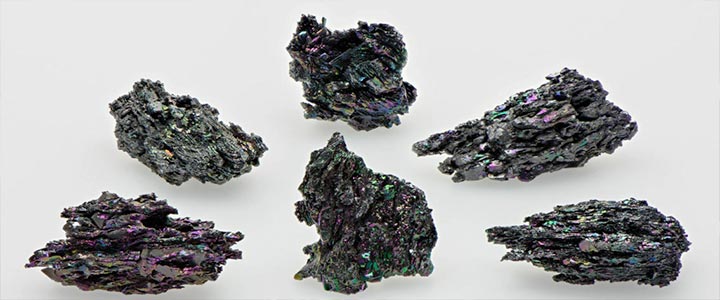
In fact, manufacturers not only have mature production processes and extensive experience, but can also produce and supply a wide range of reliable Silicon Carbide products tailored to customer requirements. Furthermore, through years of understanding Silicon Carbide, users can learn about its details and gain more information about it. Silicon Carbide is smelted from raw materials such as lime, petroleum coke (or coal coke), and sawdust at high temperatures in a resistance furnace.
Under natural conditions, Silicon Carbide also contains minerals such as moissanite. It is also known as Silicon Carbide. Silicon Carbide is one of the modern non-oxide high-tech refractory materials, along with silicon carbide, b, and other silicon carbide. It is also known as gold steel grit and refractory sand. There are two main types of Silicon Carbide produced industrially in China: black silicon carbide and green silicon carbide. Both have a hexagonal crystal structure, a specific gravity of 3.20 to 3.25, and a microhardness of 2840 to 3320 kg/m³. Silicon carbide boasts stable chemical properties, high thermal conductivity, low thermal expansion coefficient, and excellent wear resistance. Besides being an abrasive, it has numerous other applications. For example, applying silicon carbide powder to turbine impellers and cylinder linings can improve wear resistance and extend service life by 1-2 times.
Generally speaking, Silicon carbide is primarily used in four areas: functional ceramics, refractories, abrasives, and metallurgical materials. While Silicon carbide crude products are already available in large quantities, they cannot be considered high-tech products. However, the application of high-tech nano-Silicon carbide crude products will not achieve economies of scale in the short term. Silicon carbide material manufacturers welcome new and existing customers to contact us. We have the capability and capacity to meet your silicon carbide material needs. For more information, please contact us.


 English