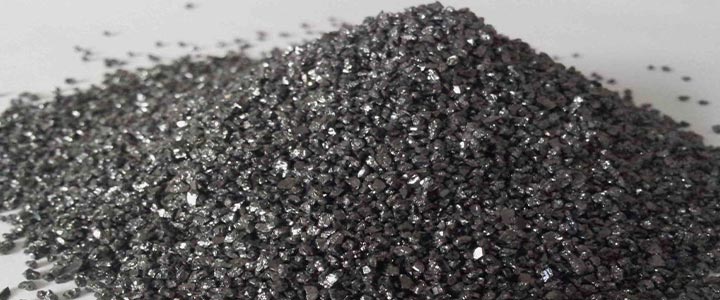
Silicon Carbide is a non-oxidizing ceramic used in a variety of products subject to high temperatures, high shock, and mechanical demands. Due to its hardness, it is suitable for abrasive and wear-resistant parts. It is also used in high-temperature, low-expansion refractories and ceramics, and in electronics, where it provides thermal conductivity and other properties. SiC is only harder than carboride and diamond.
Silicon Carbide itself can be bonded in a variety of ways and can be formed into parts using a variety of methods. Hot-pressed and reactive bonded parts are generally porous, uneven, poorly conductive, and impact-resistant. In comparison, single-crystal silicon offers superior performance but is more expensive to manufacture.
CVD furnaces can be used to produce uniform, dense, solid, pure silicon carbide parts. Surprisingly, traditional slurry deflocculation and plaster casting (if using very fine Silicon Carbide powder) can be used to cast 100% Silicon Carbide powder. Silicon Carbide castings are recommended to be separated in completely dry molds, and dispersants may require special measures before proper mixing. Silicon carbide casting mixtures can also include some plastic clay to better control hanging and allow for the use of coarser grades (e.g., refractory inlay). The product should be heated to 1500°C.
In ceramics, Silicon carbide is commonly used in high-heat-load kiln racks. However, this material is increasingly being used to produce a variety of low-expansion, high-heat-resistant, and wear-resistant products.
In ceramic glazes, Silicon carbide powder has some unique applications. It is suitable for crater and foam glazes. Available oxygen is absorbed by silicon, forming SiO. Carbon combines with oxygen to form gas bubbles and CO. This mechanism can produce a reducing effect on oxidative firing, but it presents significant difficulties (foaming). The carbon released by the carbon particles can reduce metal oxides such as iron and copper. The addition of tin oxide can enhance color development, especially copper red. Because Silicon carbide is consumed rapidly, rapid combustion is required. For more information, please contact us.


 English