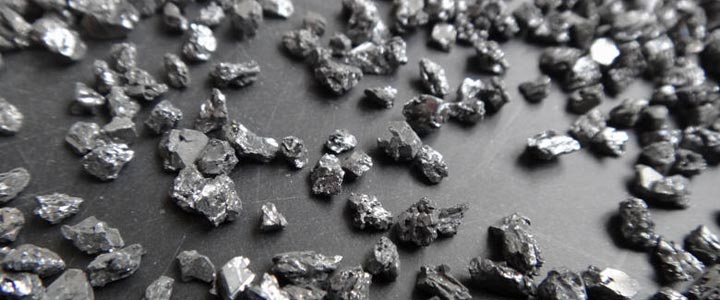
Silicon carbide generally refers to an agent used to remove free sulfur or sulfur compounds from fuels, raw materials, or other materials. In pollutant control and treatment, it primarily refers to agents used to remove sulfur oxides (including SO₂ and SO₃) from exhaust gases. Various alkaline compounds can be used as Silicon Carbide. Silicon Carbide is commonly used to remove sulfur dioxide from flue gases. Inexpensive lime, limestone, and alkaline solutions prepared with calcareous agents are commonly used. These absorb most of the sulfur dioxide in the flue gas and fix it in the fuel slag. Chemical plants and smelters often use solutions such as sodium carbonate and alkaline aluminum sulfate as Silicon Carbide to treat exhaust gases containing sulfur dioxide, which can then be desorbed and recycled.
Oxygen Silicon Carbide is a solid desulfurizer that can desulfurize in the presence or absence of oxygen. During operation, it chemically adsorbs sulfur compounds from the exhaust gas into the desulfurizer's pores, changing its chemical composition and thus purifying the gas. When Silicon Carbide reaches saturation, it no longer has desulfurization capacity and needs to be regenerated, such as by stripping with steam. However, after long-term use, the activity of Silicon Carbide will gradually decrease. For example, if the pores in the Silicon Carbide are blocked by impurities, the Silicon Carbide will become inactivated. However, the presence of trace oxygen in the reaction system can enhance its desulfurization activity and extend its service life. In addition, the active components in the spent desulfurizer can be recovered.


 English