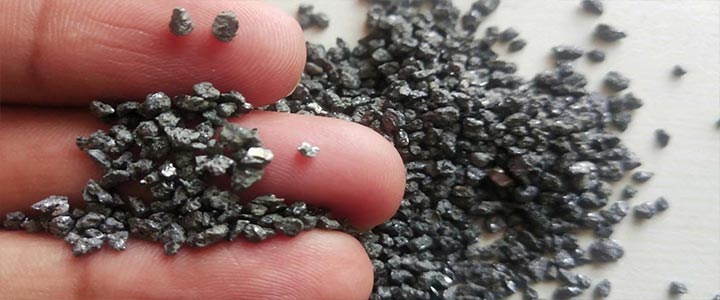
Silicon Carbide, in all its forms, is a well-known hard material. Due to its high thermal conductivity and low thermal expansion, it is highly resistant to thermal shock compared to other refractory materials. Until its recent emergence as a key material in electronics, Silicon Carbide's mechanical properties were its primary commercial interest.
The formation of Silicon Carbide powder is an essential prerequisite for the manufacture of many types of ceramic products, which are then obtained by shaping the produced Silicon Carbide powder. Silicon Carbide powders with varying purity, crystal structure, particle size, shape, and distribution can be prepared via several routes. Examined methods include growth by sublimation, carbothermal reduction, polymer conversion, and vapor-phase chemical reactions.
Despite their inherent brittleness, Silicon Carbide ceramics are the primary material for rotating and static components in many mechanical applications. Compared to metals, they are characterized by low fracture toughness and limited deformation strain. The strength of Silicon Carbide ceramic components often depends on pre-existing defects introduced into the material during processing. The type, size, shape, and location of defects vary widely, and therefore their strength also varies widely. Silicon carbide ceramics manufactured using different techniques also exhibit quite different mechanical properties. For example, sintered silicon carbide maintains its strength at high temperatures and exhibits excellent time-dependent properties, such as creep and slow crack growth resistance.
Silicon carbide's extreme hardness makes it suitable for use as a coating when wear resistance is important, such as in brake pads and electrical contacts, and in anti-slip applications, such as flooring or stair treads, terrazzo tiles, deck coating formulations, and road surfaces. Silicon carbide is also commonly used in mechanical seals in pumps, compressors, and agitators in a variety of demanding environments, including highly corrosive ones.
Silicon carbide is harder, but also more brittle, than other abrasives, such as aluminum oxide. Because the grains easily break and maintain a sharp cutting action, Silicon carbide abrasives are often used to grind hard, low-tensile-strength materials, such as chilled iron, marble, and granite, as well as materials requiring a sharp cutting action, such as fibers, rubber, leather, or copper. Silicon Carbide is also used in loose form for abrasives. It can be mixed with other materials to form abrasive pastes, or used with a cloth backing to form abrasive sheets, discs, or belts.
This concludes the application of Silicon Carbide's mechanical properties. For more information, please contact us


 English